

Country Guides
Uzbekistan

Note: The pet section requires more documentation than is commonly assumed (see the Pets section below). The prohibited and restricted items list reflects current U.S. trade.gov guidance (updated December 2025), and Uzbekistan's Customs Code was updated by Cabinet of Ministers Decree in July 2024.
Explore sections
Guide Details
Household Goods
Documents
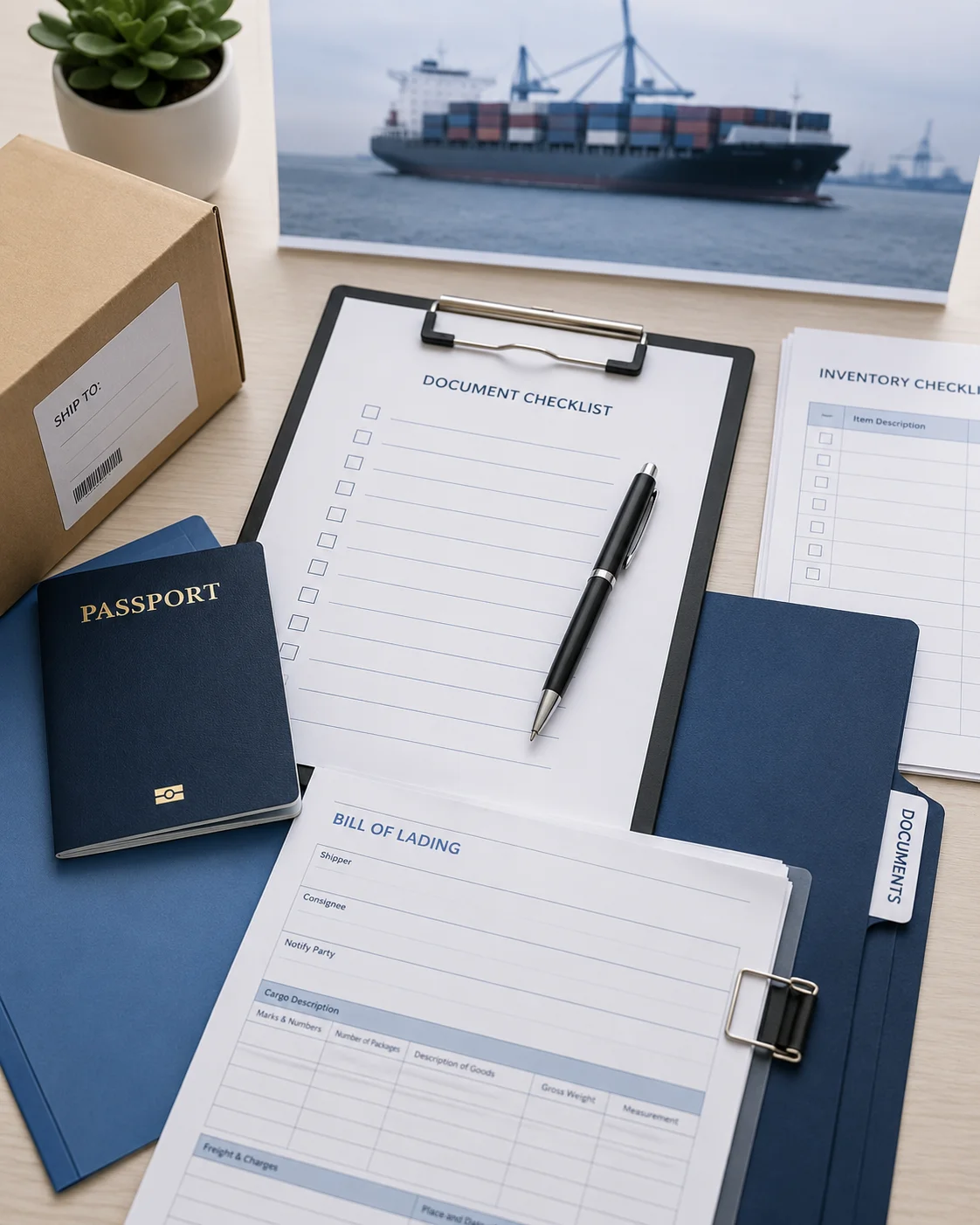
Documents required for importing used household goods, personal effects, and related shipments.
- Copy of passport
- Copy of visa
- Original bill of lading (OBL) or air waybill (AWB)
- Packing list
- Copy of accreditation card
- Ticket or travel documentation from the origin country
- Customs declaration (showing the goods were originally exported from Uzbekistan, or proof the shipment is being re-imported)
- Copy of AWB with Uzbek Customs stamps (if re-importing goods previously exported)
- Copy of diplomatic card
- Letter to the Customs Committee
Specific Information
Duties on Non-Diplomatic Shipments: All non-diplomatic household goods shipments are subject to customs duties and taxes. Duties range from approximately 60% to 110% of the CIF (cost, insurance, freight) value, totaling approximately USD 5 per kilogram as a practical working estimate. This is significantly higher than in most countries and is a critical cost factor to communicate to clients before booking.
Returning Citizens — Re-Import Proof: For returning Uzbek citizens, a copy of the AWB with Uzbek Customs stamps must be presented to prove the shipment is a re-importation of goods originally exported from Uzbekistan. If this documentation is unavailable, the shipment is treated as a new import subject to full duties.
Value Declaration Warning: Insurance documents or other paperwork showing the true market value of goods should not be included with the shipment, as these may trigger assessment of higher duties and taxes.
Customs Code Update: Uzbekistan's Customs Code is the primary legislation governing goods movement. Cabinet of Ministers Decree No. 418 (July 13, 2024) governs the import license process. As of May 1, 2025, customs value controls apply to 70 product categories — declared prices cannot be below 80% of the average value over the preceding 90 days.
ISPM 15: All wooden packing materials must comply with ISPM 15 phytosanitary treatment standards.
Practical Note: Uzbekistan has a complex and at times unpredictable customs environment. The destination agent in Tashkent is essential for managing clearance. Costs are substantially higher than in most of the region. Advise clients in writing of the duty exposure before the shipment departs.
Prohibited & Restricted Items
Prohibited Items
The following goods are prohibited from import into Uzbekistan:
- Narcotic drugs, psychotropic substances, and drug precursors
- Printed materials, manuscripts, photographs, films, audio/video materials that aim to undermine the state or social system, violate territorial integrity, promote war, terrorism, violence, national extremism, religious hatred, racism, anti-Semitism, fascism, or pornography
- Portable laser emitters
- Explosives and pyrotechnics
- Weapons of all kinds (without the required license)
- Toxic and radioactive materials (without the required license)
Restricted / Dutiable Items
Alcohol (personal use): 1 liter of wine or spirits per person. Items in excess are subject to duties and taxes.
Precious jewelry: Maximum 30 grams per person. Jewelry, precious stones, and currency may only be imported as accompanied baggage and must be declared to Customs at the airport upon arrival.
Firearms and weapons: Require a license from the Analytical Department of the Cabinet of Ministers. [PERMIT REQUIRED]
Military equipment and dual-use production machinery: Require a license from the Analytical Department of the Cabinet of Ministers. [PERMIT REQUIRED]
Uranium, radioactive substances, and related equipment: Require a license. [PERMIT REQUIRED]
Precious metals and goods made from them (except Central Bank silver/gold bars exported by individuals): Require a license. [PERMIT REQUIRED]
Cultural property: Requires permission from relevant authorities. [PERMIT REQUIRED]
Unmanned aerial vehicles (UAVs/drones): Require permission from relevant authorities prior to import. [PERMIT REQUIRED]
Wild plants and botanical collections: Require permission from the State Committee for Ecology and Environmental Protection. [PERMIT REQUIRED]
Wild animals, parts, zoological collections, and eggs: Require permission from the State Committee for Ecology and Environmental Protection. [CITES / PERMIT REQUIRED]
Substances harmful to the ozone layer: Require permission from relevant authorities. [PERMIT REQUIRED]
Environmentally hazardous items and waste: Require permission from relevant authorities. [PERMIT REQUIRED]
Importing a Used Personal Vehicle
Required Documents
- Copy of passport **For All Importers**
- Copy of visa **For All Importers**
- OBL / AWB **For All Importers**
- Original pro-forma invoice **For All Importers**
- Original technical passport (vehicle registration document) **For All Importers**
- Copy of accreditation card **For Foreign Nationals (Non-Diplomats)**
- Ticket or travel documentation from the origin country **For Returning Uzbek Citizens**
- Copy of AWB with Uzbek Customs stamps (if re-importing a vehicle previously exported from Uzbekistan) **For Returning Uzbek Citizens**
- Copy of diplomatic card **For Diplomats**
- Letter to the Customs Committee **For Diplomats**
Specific Information
For returning Uzbek citizens, a copy of the AWB with Uzbek Customs stamps must be presented to demonstrate the vehicle is being re-imported. Without this documentation, the vehicle is assessed as a new import subject to full customs duties based on the CIF value, vehicle age, and engine capacity.
Contact the destination agent in Tashkent for current duty rates and vehicle eligibility before any vehicle shipment is booked. Import restrictions and duty calculations for vehicles change periodically and are best confirmed locally.
Pets
A mandatory ISO microchip and specific vaccination protocols now apply.
No import permit is required for pets entering with their owner. Commercial imports require an import permit.
Personal import is limited to one to two cats, dogs, or birds (except pigeons) per person.
Advance notice to veterinary officials at Tashkent International Airport is required to ensure inspectors are available. Customs clearance for a pet can take up to one day. Arrivals outside normal business hours should be planned with extra care.
No rabies titer test is required for entry into Uzbekistan. However, Uzbekistan is classified as a high-rabies risk country by the World Organisation for Animal Health; if the pet will return to its country of origin, a titer test may be required by that country. Plan accordingly.
No dog breeds are banned from import into Uzbekistan.
Puppies and kittens must not be vaccinated for rabies before 3 months of age. They should be vaccinated after 3 months and wait 30 days before travel.
Pets not meeting requirements will be quarantined, returned to the country of origin, or euthanized. All costs are the importer's responsibility.
Pets must enter Uzbekistan by air via Tashkent International Airport.
Other Animals: Birds, reptiles, amphibians, rodents, and rabbits are not subject to the rabies vaccination requirement but may require a health certificate. Wild animals, zoological collections, and CITES-listed species require permits from Uzbekistan's State Committee for Ecology and Environmental Protection. [CITES / PERMIT REQUIRED]
Special Categories
Documents Required (Dogs and Cats)
- ISO 11784/11785-compliant 15-digit microchip (mandatory; all documentation must reflect the microchip number)
- Rabies vaccination administered between 30 days and 12 months before entry; pet must be over 3 months of age at vaccination
- Additional vaccinations (recommended; core vaccines per country-of-origin veterinary standards):
- Dogs: distemper, hepatitis, leptospirosis, parvovirus
- Cats: feline viral rhinotracheitis, panleukopenia, feline leukemia
- Internal and external parasite treatment (recommended; record on health certificate or in a separate treatment document)
- International health certificate issued and endorsed by a government veterinarian in the country of origin within 10 days of entry into Uzbekistan
- Vaccination record
Consignment Instructions
Contact the destination agent to ensure all requirements have been met prior to import, especially for differences between air and sea shipments.
Duties Are Substantial. Non-diplomatic household goods shipments are subject to customs duties of approximately 60%–110% of CIF value (approximately USD 5/kg). This is not a duty-free import regime. Clients must be informed in writing of the likely duty exposure before the shipment is booked.
Value Documentation. Do not include insurance certificates, purchase receipts, or other documents showing the market value of goods in the shipment. These can trigger higher duty assessments. Retain such documents at origin or with the owner separately.
Re-Import Documentation. Returning Uzbek citizens re-importing goods or vehicles must present original customs stamps and AWB copies from the original export to prove re-importation. Without this, full import duties apply. Ensure these documents are obtained and retained before the goods are returned.
Diplomatic Procedures. Diplomatic shipments require a letter to the Customs Committee and a copy of the diplomatic card. The destination embassy should be contacted to initiate the customs facilitation process.
Routing. Uzbekistan is landlocked. International household goods shipments typically route via air to Tashkent International Airport, or by road/rail through Kazakhstan, Russia, or other neighboring countries. Confirm routing and transit requirements with the destination agent. Sea freight to the Caspian Sea via Azerbaijan or Russia, then onward by rail, is also used for larger shipments.
ISPM 15. All wooden packing materials must comply with ISPM 15 phytosanitary standards.
Cultural & Other Information
Uzbekistan is a doubly landlocked country in Central Asia, bordered by Kazakhstan to the north, Kyrgyzstan to the northeast, Tajikistan to the southeast, Afghanistan to the south, and Turkmenistan to the southwest. The capital and largest city is Tashkent. Uzbekistan has a population of approximately 37 million, making it the most populous country in Central Asia. The official language is Uzbek; Russian is widely used in business and government. The currency is the Uzbekistani som (UZS).
Uzbekistan has been undergoing significant economic reforms since 2016, including currency liberalization, reduced import barriers in some sectors, and investment in tourism infrastructure. The country is home to major UNESCO World Heritage sites including the historic cities of Samarkand, Bukhara, and Khiva. The Customs Committee operates under the Ministry of Economy and Finance.
Time Zone: Uzbekistan Time (UZT), UTC+5. Uzbekistan does not observe daylight saving time.
Useful Links:
- OpenFactBook — Uzbekistan
- Wikipedia — Uzbekistan
- Customs Committee of Uzbekistan
- Ministry of Foreign Affairs of Uzbekistan
- Uzbekistan Missions Abroad
- U.S. trade.gov — Uzbekistan Customs Regulations
- U.S. trade.gov — Uzbekistan Import Requirements and Documentation
- U.S. trade.gov — Uzbekistan Prohibited and Restricted Imports
- PetTravel.com — Uzbekistan Pet Import Requirements
Useful resources