

Country Guides
Zambia

A prominent wildlife products warning has been added per the trade.gov source (updated March 2026), noting mandatory minimum five-year prison sentences for possession of prohibited wildlife items.
Explore sections
Guide Details
Household Goods
Documents
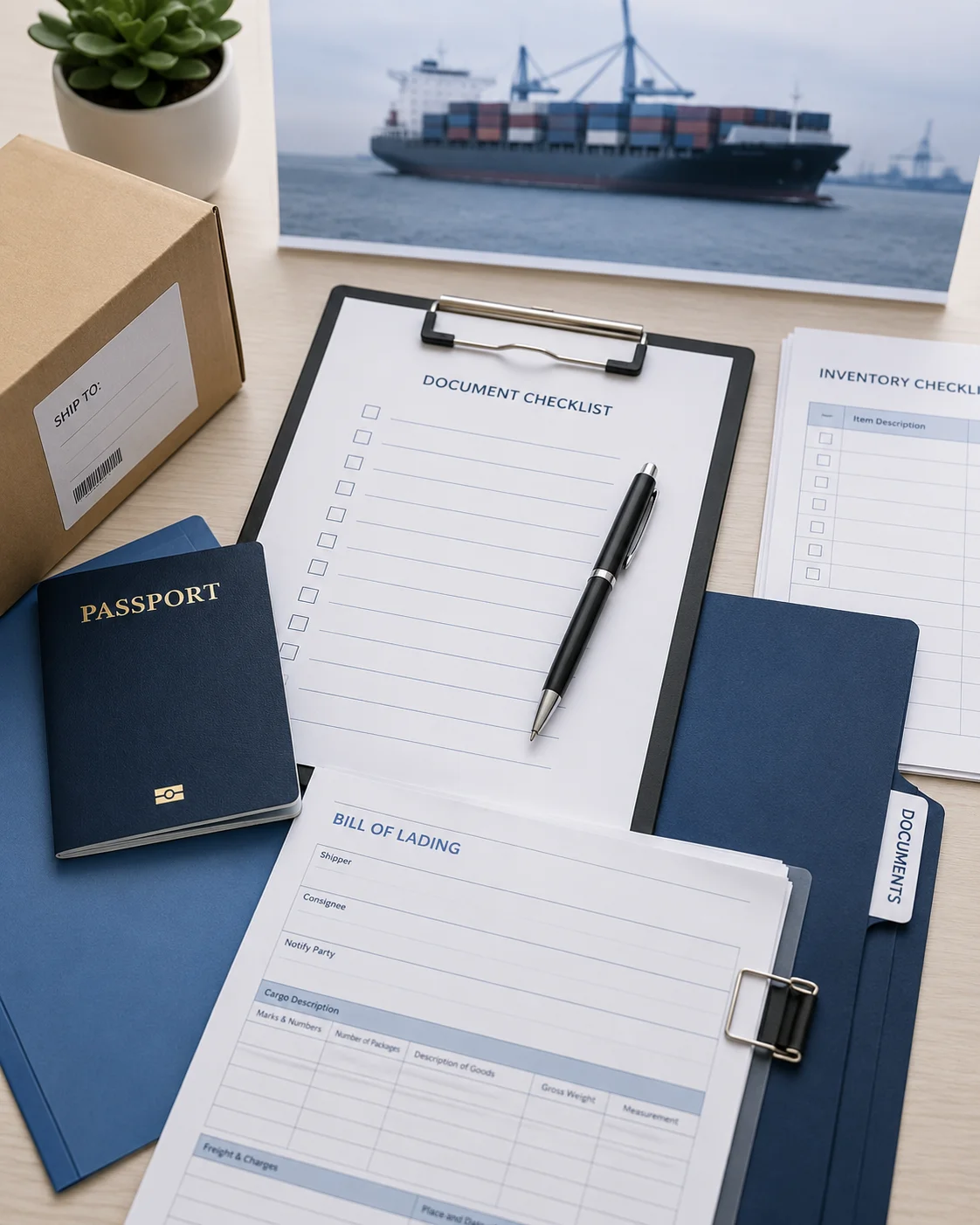
Documents required for importing used household goods, personal effects, and related shipments.
- Copy of passport certified by the Zambia Revenue Authority (ZRA)
- Packing list
- Original bill of lading (OBL) — express release accepted — or air waybill (AWB)
- Copy of resident permit or work permit, certified by the Zambia Revenue Authority
- Original letter of employment
- Tax Identification Number (TPIN)
- Detailed inventory in English, dated, valued, and signed by the owner of the goods — for any new items purchased less than 6 months before the shipment's arrival, attach the original purchase invoices
Specific Information
ISPM 15: All wooden packing materials must comply with ISPM 15 phytosanitary treatment standards.
The owner of the goods should be in Zambia before the shipment arrives. All required documents must be received by the destination agent before the shipment arrives to minimize port charges and storage costs. If Customs requests an interview with the shipper, the shipper must be present.
Documents must be certified by the Zambia Revenue Authority — straightforward passport copies are not sufficient. Allow time for certification before the shipment is dispatched.
Prohibited & Restricted Items
Prohibited Items
- Unlawful drugs and narcotics
- Pornographic materials
- Counterfeit goods
- Cultural artifacts and objects of cultural importance
- Henna
- Palm trees and any by-products of palm trees
- Explosive materials
Wildlife Products — Mandatory Minimum Sentence Warning: It is a serious criminal offence under both Zambian law and U.S. law to buy, possess, or transport animals or animal products including hippo or warthog tusks, tortoise shell, rhino horn, elephant ivory, or any items made from these materials. In Zambia, penalties include significant fines and a mandatory minimum five-year prison sentence. Asset forfeiture applies in addition. The Department of National Parks and Wildlife actively screens at all international ports of entry and departure. Local sellers frequently attempt to sell prohibited items to foreign tourists — it is the buyer's responsibility to avoid prohibited purchases. This warning applies equally to members' clients and their household goods shipments. [CITES]
Restricted / Dutiable Items
Electrical items: 25% import duty + 16% VAT.
Computers: 15% import duty + 16% VAT.
Alcohol and spirits: Must be shipped separately from a personal effects shipment. Subject to 100% tax.
Tobacco (personal allowance): Cigarettes (200), cigars (50), cigarillos (100), tobacco (500 g).
Alcohol (personal allowance): 2.5 liters of alcohol and 2.5 liters of spirits.
Firearms and ammunition: Authorization from the territorial administration required. [PERMIT REQUIRED]
Hunting weapons: Authorization from the Ministry of Interior required. [PERMIT REQUIRED]
Endangered species and CITES-listed items: Authorization from CITES required; this includes any products or parts thereof. [CITES / PERMIT REQUIRED]
Medication: Subject to inspection and import controls.
Importing a Used Personal Vehicle
Required Documents
- Original passport of the owner of the goods
- Original registration card
- OBL / AWB — must include the vehicle's chassis number, engine number, color, model, make, and weight
- Non-sale certificate
- Car invoice (must show purchase price and date of purchase)
- Letter of transfer from the shipper's employer
- Work permit, resident permit, or diplomatic ID
- JEVIC certificate (required for vehicles imported from Japan, Singapore, South Africa, or the UK)
Specific Information
Duty Rates:
- Import duty on new cars: 25% of invoice value
- Excise duty: 30%
- VAT: 16% of invoice value
- Carbon tax: USD 30.00
Documentation should be sent to the agent before the shipment arrives to avoid demurrage and storage charges during Customs processing. Confirm specific pre-arrival timeframes with the destination agent.
Pets
- Dogs: distemper, hepatitis, leptospirosis, parvovirus 3. Additional vaccinations (mandatory):
- Cats: feline viral rhinotracheitis, panleukopenia, feline leukemia 3. Additional vaccinations (mandatory):
Pets must enter as air cargo only via Kenneth Kaunda International Airport — cabin and checked baggage entry are not permitted.
- ISO 11784/11785-compliant 15-digit microchip (mandatory; all documentation must reflect the microchip number)
- Rabies vaccination administered between 30 days and 12 months before entry; pet must be over 3 months of age at vaccination
- Internal and external parasite treatment (recommended; record on health certificate or in a separate treatment document)
- International health certificate issued by a licensed veterinarian and endorsed by a government veterinarian in the country of origin, within 10 days of entry into Zambia; the import permit form includes instructions to be given to the veterinarian for health certificate preparation
- Import permit from the Ministry of Fisheries and Livestock (Government Veterinary section) — required for all dogs and cats; apply well in advance of travel
The import permit must be obtained from the Government Veterinary section under the Ministry of Fisheries and Livestock. Apply as early as possible — the permit form includes instructions for the veterinarian who prepares the health certificate.
Pets must enter Zambia by air as air cargo only via Kenneth Kaunda International Airport in Lusaka. Cabin travel and checked baggage are not permitted. The origin agent may need to book the transport as air cargo.
Advance notice to veterinary officials at the airport is required to ensure inspectors are available, particularly for arrivals outside normal business hours.
No rabies titer test is required for entry into Zambia. No breeds are banned from import.
Puppies and kittens under 3 months of age may enter with a microchip, health certificate, proof of the mother's rabies vaccination, and attestations about rabies occurrence in the country of origin.
Pets not meeting requirements will be quarantined, returned to the country of origin, or euthanized. All costs are the importer's responsibility.
Other Animals: Birds, reptiles, amphibians, rodents, and rabbits are not subject to the rabies vaccination requirement but may require a health certificate and must meet applicable import conditions.
CITES: Import of wildlife species requires CITES permits. [CITES]
Consignment Instructions
Contact the destination agent to ensure all requirements have been met prior to import, especially for differences between air and sea shipments.
Documents Before Arrival — Critical. All documents must reach the Zambia destination agent before the shipment arrives. Zambia's port (the primary landlocked route goes through Dar es Salaam in Tanzania or Durban in South Africa) involves transit charges that accumulate rapidly. Late documents lead to significant demurrage and storage costs.
ZRA Certification. Copies of the passport and resident/work permit must be certified by the Zambia Revenue Authority, not merely notarized or photocopied. Arrange this certification process before the shipment departs origin.
New Items — Separate Inventory. Any items purchased less than 6 months before the shipment arrives must be listed separately on a detailed valued inventory with original purchase invoices attached. Failing to identify new items correctly is a common cause of clearance complications.
Alcohol — Ship Separately. Alcohol and spirits must not be included in the household goods shipment. They must be shipped separately and are subject to 100% tax. Advise clients at the booking stage.
Wildlife Awareness. Remind clients that Zambia has a strict zero-tolerance policy on prohibited wildlife products. Items such as carved wooden figures, curios, taxidermy, or decorative items that incorporate animal parts may be subject to seizure and prosecution. Advise clients not to include any animal products of uncertain origin.
Routing. Zambia is landlocked. Sea freight typically routes through Dar es Salaam (Tanzania) via the TAZARA rail corridor, or through Durban (South Africa) by road and rail. Both routes add transit time and cost. Confirm routing with the destination agent.
Cultural & Other Information
Zambia is a landlocked country in southern Africa, bordered by the Democratic Republic of the Congo and Tanzania to the north, Malawi to the east, Mozambique, Zimbabwe, Botswana, and Namibia to the south, and Angola to the west. The capital is Lusaka. Zambia has a population of approximately 20 million. The official language is English; Bemba, Nyanja, Tonga, and Lozi are widely spoken regional languages. The currency is the Zambian kwacha (ZMW).
Zambia is known for Victoria Falls (shared with Zimbabwe), extensive wildlife reserves, and significant copper deposits. The economy is based largely on copper mining, agriculture, and tourism. The country is a stable democracy and has been at peace since independence in 1964.
Time Zone: Central Africa Time (CAT), UTC+2. Zambia does not observe daylight saving time.
Useful Links:
Useful resources