


Start here
Overview
Explore sections
Guide Details
Household Goods
Documents
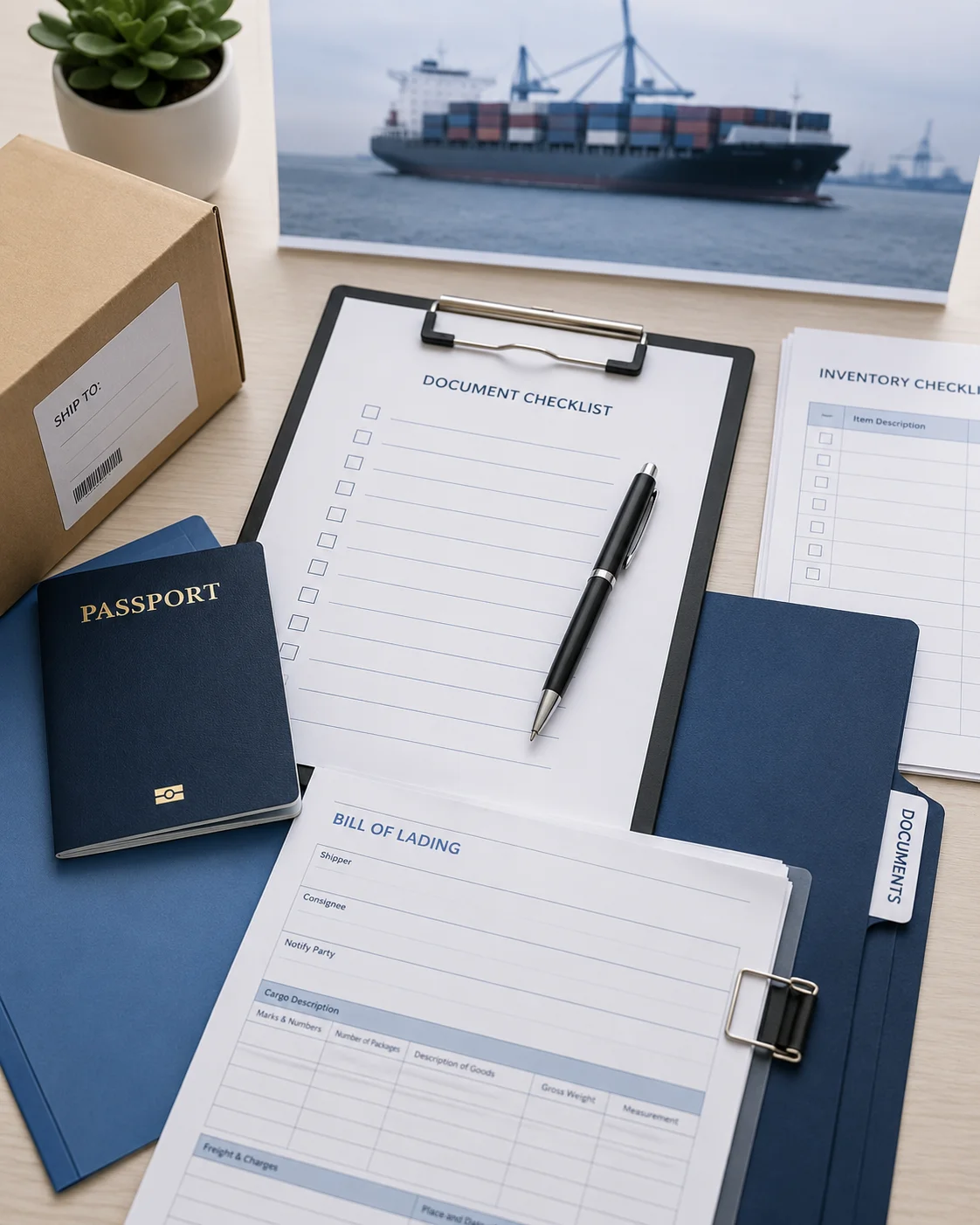
Documents required for importing used household goods, personal effects, and related shipments.
- Original passport
- Original bill of lading (OBL), express release, or air waybill (AWB)
- Original detailed inventory with serial numbers of all electrical appliances
- Original packing list with values stated in USD, in English
- Freight invoice (for customs clearance purposes)
- Resident permit, work permit, or letter of employment
- Letter of appointment from the organization in Zimbabwe
- The resident stamp, work permit, or letter of employment must explain the details of the new contract in Zimbabwe
- Payslips for the past 2 years
- Bank statement for the past 6 months
- Exit stamp showing when the owner of the goods left Zimbabwe (required for interview with Customs)
- Report order letter from the Embassy in Zimbabwe
- Diplomatic ID card
- Duty exemption letter from the Ministry of Foreign Affairs of Zimbabwe
Specific Information
Diplomatic Shipments: A duty exemption letter from the Ministry of Foreign Affairs must be obtained before clearance. The Embassy in Zimbabwe initiates this process. Coordinate timing carefully to avoid storage charges while the exemption letter is being obtained.
ISPM 15: All wooden packing materials must comply with ISPM 15 phytosanitary treatment standards.
The owner of the goods must be present during Customs clearance. Customs will inspect all shipments.
Duties & Taxes
Duty-Free Eligibility: Goods must be household goods and personal effects only. Diplomats are exempt from duties. Returning Zimbabwean citizens who have lived abroad for 2 or more years are also exempt from duties — this exemption mirrors the diplomatic exemption and requires documentation demonstrating the 2-year period of residence abroad (payslips and bank statements are the standard supporting evidence; Customs will conduct an interview with the returning resident).
Prohibited & Restricted Items
Prohibited Items
- Narcotics and illegal drugs
- Explosive materials
- Foreign soil
- Pornographic, defamatory, or obscene publications
- Cultural artifacts and objects of cultural importance
- Henna
- Palm trees and any products thereof
Restricted / Dutiable Items
Wine and spirits: 2 liters duty-free allowance per person.
Cigarettes: 200 cigarettes duty-free per person.
Plants and seeds: An agricultural certificate and phytosanitary certificate are required (obtain from the Embassy in the origin country). [PERMIT REQUIRED]
Animals: Agricultural certificate and phytosanitary certificate required (obtain from the Embassy in the origin country). [PERMIT REQUIRED]
Medication: Subject to import controls. Controlled substances require prior authorization.
Firearms and ammunition: Authorization from the territorial administration is required. [PERMIT REQUIRED]
Endangered species and CITES-listed products: Authorization from CITES required. [CITES / PERMIT REQUIRED]
Importing a Used Personal Vehicle
Required Documents
- Original registration card
- Certificate of ownership
- Change of residence certificate
- Copy of purchase invoice
Specific Information
The OBL must show the vehicle's chassis number, engine number, cubic capacity, year of manufacture, brand, and model.
Taxes on vehicles are assessed based on age, power, and engine capacity and typically range from 100% to 110% of the CIF (cost, insurance, freight) value. Confirm current duty rates with the destination agent before shipment, as Zimbabwe's duty structure is subject to revision.
Pets
- Dogs: distemper, hepatitis, leptospirosis, parvovirus 3. Additional vaccinations (recommended):
- Cats: feline viral rhinotracheitis, panleukopenia, feline leukemia 3. Additional vaccinations (recommended):
Pets may enter as checked baggage as well as air cargo — an improvement over some other African countries.
- ISO 11784/11785-compliant 15-digit microchip (mandatory; all documentation must reflect the microchip number)
- Rabies vaccination administered between 30 days and 12 months before entry; pet must be over 3 months of age at vaccination
- Internal and external parasite treatment (mandatory; must be recorded on the health certificate or a separate treatment document)
- International health certificate issued by a licensed veterinarian and endorsed by a government veterinarian in the country of origin, within 10 days of entry into Zimbabwe
- Import permit from the Director of Animal Health — required for pets entering from all countries except the following SADC member states: Botswana, Eswatini (Swaziland), Lesotho, Malawi, Namibia, and South Africa. Apply well in advance; the permit is valid for 6 months from date of issuance.
- Vaccination record
SADC Exemption: Pets entering Zimbabwe from Botswana, Eswatini, Lesotho, Malawi, Namibia, or South Africa do not require an import permit. All other countries require an import permit from the Director of Animal Health. Apply well before travel — the permit is valid for 6 months from issuance and includes instructions for the veterinarian who prepares the health certificate.
Entry Airport: Pets must enter Zimbabwe by air via Robert Gabriel Mugabe International Airport (formerly Harare International Airport). Pets may enter as checked baggage or air cargo according to the airline's pet policy.
Advance Notice: Importers must notify veterinary officials at the airport before arrival to ensure inspectors are available, particularly for arrivals outside normal business hours.
Transit: Pets transiting Zimbabwe by road are subject to the same import requirements as those entering by air. An Interritorial Movement Permit is required to enter Zimbabwe from South Africa. Health certificates from Malawi are valid for only 7 days; if pets do not enter Zimbabwe within that period, a veterinary examination in Zimbabwe for a new certificate may be required.
No rabies titer test is required. No breeds are banned from import. Quarantine is not imposed if all regulations are met.
Puppies and kittens under 3 months of age may enter with a microchip, health certificate, proof of the mother's rabies vaccination, and attestations regarding rabies occurrence in the country of origin.
Pets not meeting requirements will be quarantined, returned to the country of origin, or euthanized. All costs are the importer's responsibility.
Other Animals: Birds, reptiles, amphibians, rodents, and rabbits are not subject to the rabies vaccination requirement but may require a health certificate and must meet applicable import conditions.
CITES: Import of wildlife species requires CITES permits. [CITES]
Consignment Instructions
Contact the destination agent to ensure all requirements have been met prior to import, especially for differences between air and sea shipments.
Owner Presence Required. The owner of the goods must be present during Customs clearance. This is a firm requirement in Zimbabwe — clearance cannot be completed in the owner's absence. Coordinate travel and shipping dates accordingly.
All Shipments Inspected. Customs will physically inspect all shipments. This adds time to the clearance process and may add examination costs. Ensure the inventory is accurate, itemized, and includes serial numbers for all electrical appliances.
Returning Citizens — Interview. Customs will conduct an interview with returning Zimbabwean citizens claiming the duty exemption. The client must bring their payslips for the past 2 years and bank statements for the past 6 months, along with their passport showing the exit stamp from when they departed Zimbabwe. Prepare clients for this interview in advance.
Diplomatic Exemption Letter Lead Time. The duty exemption letter from the Ministry of Foreign Affairs must be in hand before clearance begins. Storage and demurrage charges accumulate while this letter is being obtained. Advise diplomatic clients and their embassies to initiate the request promptly.
Pet Import Permit (Non-SADC Countries). For pets from countries other than the six SADC exempted states (Botswana, Eswatini, Lesotho, Malawi, Namibia, South Africa), the import permit must be obtained from the Director of Animal Health well before travel. The permit is valid for 6 months. Allow sufficient time for processing.
Currency Note. Zimbabwe has experienced significant currency instability. Packing list values must be stated in USD. Confirm with the destination agent how duties and fees are currently being assessed and paid, as the currency and payment environment can change.
ISPM 15. All wooden packing materials must comply with ISPM 15 phytosanitary treatment standards.
Cultural & Other Information
Zimbabwe is a landlocked country in southern Africa, bordered by Zambia to the north, Mozambique to the northeast and east, South Africa to the south, and Botswana and Namibia to the west. The capital is Harare; Bulawayo is the second-largest city. Zimbabwe has a population of approximately 16 million. The official languages include English, Shona, and Ndebele, among others. The currency is the Zimbabwe Gold (ZiG), introduced in April 2024 to replace the Zimbabwean dollar; the US dollar and South African rand are also widely used.
Zimbabwe is home to Victoria Falls (shared with Zambia), Hwange National Park, and the ruins of Great Zimbabwe. The economy has experienced severe instability since the early 2000s; some recovery has occurred in recent years with the arrival of a new government in 2017.
Time Zone: Central Africa Time (CAT), UTC+2. Zimbabwe does not observe daylight saving time.
Useful Links:
Useful resources
Quick Links & Resources
Contact the Zimbabwe Ministry of Foreign Affairs — for customs authority